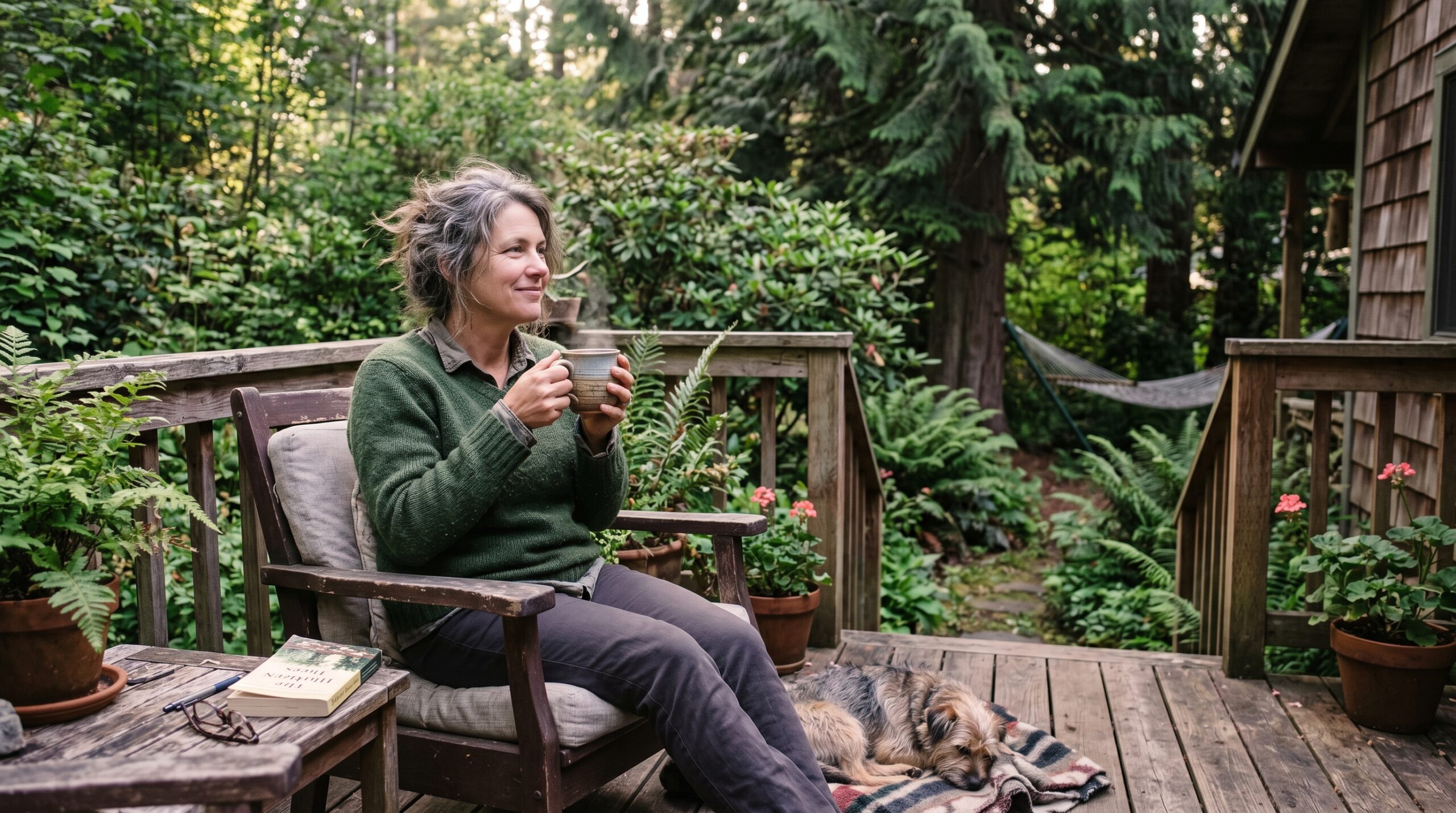
Somewhere along the way, a lot of us learned that rest is something you have to earn, and that until the list is done, you do not deserve it. The list is never done.
Rest is not a reward for finishing everything. It is one of the inputs your nervous system needs to keep working at all. Earlier this week we wrote about what chronic stress and burnout actually do to the brain. This is the practical other half: how to give a tired system what it needs, without turning self-care into one more thing to fail at. Summer is as good a season as any to practice, so let’s keep it simple and real.
In this article
- The myth that rest is earned
- Why sleep is the foundation
- Not all rest is restorative
- Small summer practices that actually help
- When rest brings up guilt
- A Rogue Valley summer
- Where to start
- Frequently asked questions
The myth that rest is earned
The “earn your rest” idea sounds like discipline, but it runs against how bodies work. Your nervous system does not bank energy and pay it out only once you have been productive enough. It needs recovery the way it needs food and water, on a regular cycle, not as a bonus at the end. When stress runs long without relief, as we described in our piece on what burnout does to your brain, the system gets worn down in ways willpower cannot push through. Rest is not the opposite of effort. It is what makes sustained effort possible.
Why sleep is the foundation
If you only protect one form of rest, make it sleep. The sleep researcher Matthew Walker has shown that sleep does real work on emotional processing, helping the brain take the sharp edge off difficult experiences overnight. Skimp on it and everything gets harder: mood, focus, patience, the lot. We made the fuller case in sleep is not a luxury, and summer, with its long light and loose schedules, is a good time to reset a sleep rhythm that spring quietly wrecked.
Not all rest is restorative
Here is a distinction that changes things for a lot of people: there is a difference between rest that restores you and rest that just numbs you out. Scrolling for two hours can leave you more drained, not less. We pulled this apart in restorative rest versus numbing, and it is worth a read, because the goal is not just “do nothing.” It is to do the kind of nothing that actually refills the tank: a walk, time outside, real quiet, a conversation with someone easy, a nap, your hands in the dirt.
Small summer practices that actually help
You do not need an elaborate routine. The nervous system responds to small, regular signals of safety more than to grand gestures. A few that fit a Southern Oregon summer:
Morning light before the screen. Step outside for a few minutes before you reach for your phone. Early light helps set your body clock, which helps your sleep that night.
One thing with your hands. A garden, a meal, a walk by the creek. Single-tasking with your body is a small reset for an overworked mind.
A real pause, not a numbing one. Ten honest minutes of quiet beats an hour of half-watching something while you doomscroll.
Borrow from the toolkit. Our piece on small practices for nervous-system regulation has more, and they carry into summer just fine.
Pick one. One practice you actually do beats five you feel guilty about.
When rest brings up guilt
For some people the hardest part of rest is not the time, it is the guilt that shows up the moment they slow down. If sitting still makes you anxious, that is worth paying attention to, not pushing through. Often it is a sign of a nervous system that has been running on high alert for so long that calm feels unfamiliar, even unsafe. That is exactly the kind of thing therapy helps with, and it is more common than people think.
A Rogue Valley summer
We are lucky here. The Rogue River, Emigrant Lake, the trails around Ashland, a slow morning on the porch before the heat sets in. You do not have to make summer self-care a project or a road trip. Some of the most restorative things are five minutes from home and free. The point is not the activity. It is giving your system regular, real signals that it is safe to come down.
Where to start
If rest feels impossible, or if you slow down and the exhaustion that surfaces feels bigger than a busy season can explain, that is worth bringing to therapy. Sometimes the thing in the way of rest is not your schedule. It is a nervous system that has forgotten how to stand down, and that can change.
At Helping Hand Therapy we offer care in Central Point and Ashland, and by telehealth across Oregon. You can reach out for a free consultation whenever you are ready.
If you are in crisis right now, you can reach the 988 Suicide and Crisis Lifeline any time by calling or texting 988.
Frequently asked questions
Why do I feel guilty when I rest?
Rest guilt is common, especially if you grew up being praised mainly for productivity, or if your nervous system has been on high alert for a long time. When calm feels unfamiliar, the mind can read it as something being wrong. It tends to ease with practice and, when it runs deep, with support from a therapist.
Isn’t self-care just a trend?
The marketing version of self-care can be a trend. The underlying need is not. Recovery and sleep are real biological inputs your brain uses to regulate mood and repair after stress. That part is well supported by research, regardless of what the products promise.
How much rest do I actually need?
There is no single number, but the principle is steadiness over heroics: regular, real recovery built into ordinary weeks beats one big collapse at the end of a hard stretch. Protecting sleep is the highest-value place to start.
Can therapy help if I can’t seem to slow down?
Yes. If rest feels impossible or unsafe, therapy can help you understand why and rebuild a pace your nervous system can sustain. We see clients for this in Central Point and Ashland, Oregon, and by telehealth statewide. You can reach out through our appointment request page.
Michael Higginbotham, LPC, is co-owner of Helping Hand Therapy in Southern Oregon. He works with stress, trauma, and nervous-system regulation using somatic approaches, mindfulness, and EMDR (EMDR Basic Trained, working toward EMDRIA Certification). Helping Hand Therapy provides care in Central Point and Ashland, and by telehealth across Oregon.