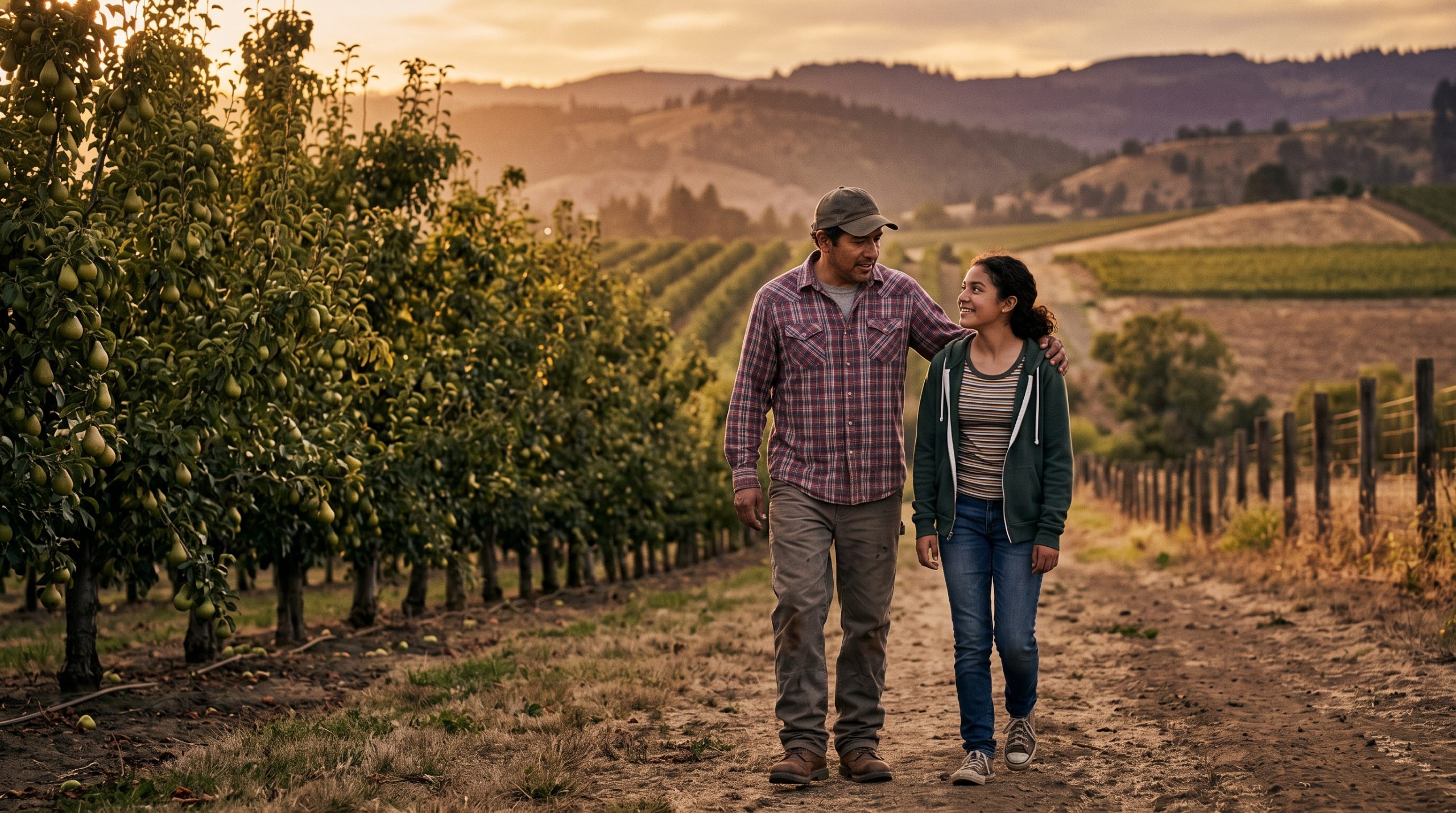
Every migration story is a story about leaving something. What people carry afterward deserves more care than it usually gets.
During Hispanic Heritage Month, we want to sit with a quieter subject: what moving countries asks of a person’s mind, and what helps carry it. This is a clinical piece, not a political one. Wherever you stand on policy questions, the people in this story are neighbors, coworkers, classmates, and clients, and the stress they carry is real, researched, and treatable. Three threads run through it: the load itself, the strengths people bring to it, and the help that exists close to home.
In this article
- The load: what migration asks of a mind
- A normal response, not a disorder
- When the generations move at different speeds
- The strengths people bring
- The help that exists
- This valley’s story
- Where to start
- Frequently asked questions
The load: what migration asks of a mind
Researchers describe migration stress as unfolding in phases: what happened before leaving, the journey itself, and the long work of resettlement afterward. The last phase is the one most people underestimate. New language, new rules, work that must be found and kept, credentials that do not transfer, and the daily translation of a whole life into an unfamiliar place. Clinicians call the strain of adapting between cultures acculturative stress, and for some families there is a further layer: research links prolonged uncertainty about status, and separation from family members, with lasting distress in children, including children who are U.S. citizens. We name that as a clinical finding, because a nervous system under chronic uncertainty behaves like a nervous system under chronic threat, whatever the cause.
A normal response, not a disorder
Here is the part the deficit story gets wrong: most people who migrate do not develop a mental health disorder. Many arrive with notable psychological strength, which makes sense when you consider what planning and surviving a move like that requires. Trouble sleeping, worry, grief for home, aches with no clear medical cause, these are common, human responses to a heavy load, not evidence of something broken. If that is you or someone you love, the message is the same one we return to often: your reaction makes sense, and support helps carry what should never be carried alone.
When the generations move at different speeds
Inside families, migration often runs at two speeds. Children absorb the new language and culture quickly; parents hold more of the old country, by necessity and by love. Research links wider parent-child acculturation gaps with more family conflict, and most families recognize the friction long before anyone names it: the teenager who interprets at the pharmacy, the parent whose authority gets tangled in translation, the dinner-table argument that is really about two homelands. None of this means a family is failing. It means the family is doing something hard, and family closeness and cultural continuity are protective threads worth strengthening on purpose, sometimes with a therapist’s help.
The strengths people bring
The strengths deserve equal billing with the strain. Deep family bonds. Communities that feed and house and hire each other. Faith that holds when circumstances do not. Language, food, music, and tradition that keep identity intact across a border. These are not decorations on the story; they are the researched, protective core of it, the same familismo and cultural continuity we wrote about in Monday’s piece. Healing work that ignores them misses most of the person.
The help that exists
What helps is concrete. Therapy that is trauma-informed and culturally humble helps people process what the road cost and settle a nervous system that has been braced for years. Family work helps bridge the generation gap without asking anyone to abandon a homeland. Community organizations reduce the practical load that drives so much of the stress. And crisis support exists in Spanish, day and night: call 988 and press 2, text AYUDA to 988, or chat at 988lifeline.org/es.
Local and real, in the Rogue Valley: La Clinica in the Medford area offers sliding-scale care, including behavioral health, regardless of insurance. Unete in Medford has supported farmworker and immigrant families since 1996. The Oregon Human Development Corporation serves farmworker families statewide with practical assistance. And Helping Hand Therapy provides trauma-informed care in English, in Central Point and Ashland and by telehealth across Oregon, and we will say plainly what we said Monday: we do not currently offer Spanish-language therapy, and we would rather point you somewhere excellent than imply otherwise.
This valley’s story
Migration built the agricultural Rogue Valley as surely as irrigation did. More than 15,000 braceros worked Oregon farms in the 1940s, and the orchards, vineyards, and farms of Jackson County have run on the labor and skill of Latino families for generations since. The weight this piece describes has been carried, quietly and capably, by our neighbors for a long time. Hispanic Heritage Month is a fitting time to say that plainly, and to mean the word neighbors.
Where to start
If resettlement stress, family strain across the generation gap, or a load you have carried for years is wearing on you or someone you love, we would be glad to talk. Helping Hand Therapy sees clients in Central Point and Ashland, and by telehealth across Oregon. The first step is a free 30-minute consultation: request an appointment here. For Spanish-language crisis support anytime: 988, press 2, or text AYUDA to 988.
Frequently asked questions
Is it normal to still feel the effects of moving countries years later?
Yes. Resettlement is the longest phase of migration, and grief for home, worry, and stress responses can surface long after arrival, especially at milestones. That is a normal response to a major life transition, and it responds well to support.
Does migration cause mental illness?
No. Most people who migrate do not develop a mental health disorder, and many arrive with considerable psychological strength. Migration does add real stressors, and heavy stress deserves care whether or not it ever becomes a diagnosis.
Our kids are adapting faster than we are and it’s causing conflict. Is that common?
Very. Research links parent-child acculturation gaps with family friction, and it is one of the most workable problems a family can bring to therapy. The goal is a bridge between the generations, not a winner.
What if we need support in Spanish?
For crisis support, call 988 and press 2, text AYUDA to 988, or chat at 988lifeline.org/es, free and available 24/7. For ongoing care on a sliding scale, La Clinica in the Medford area offers behavioral health regardless of insurance. Helping Hand Therapy currently provides care in English, and we say that plainly so you can find the right fit fast.
About the author
Michael Higginbotham, LPC, is a Licensed Professional Counselor and co-owner of Helping Hand Therapy, with offices in Central Point and Ashland, Oregon. He works from an existential and trauma-informed perspective and is EMDR Basic Trained, working toward EMDRIA Certification. Helping Hand Therapy offers person-first, affirming care in person and by telehealth across Oregon.
Helping Hand Therapy, Central Point (billing and clinical) and Ashland (clinical), Oregon. Serving the Rogue Valley and all of Oregon by telehealth.